Why Do Pro Gamers Wear IEMs Under Noise-Canceling Headsets at Tournaments?
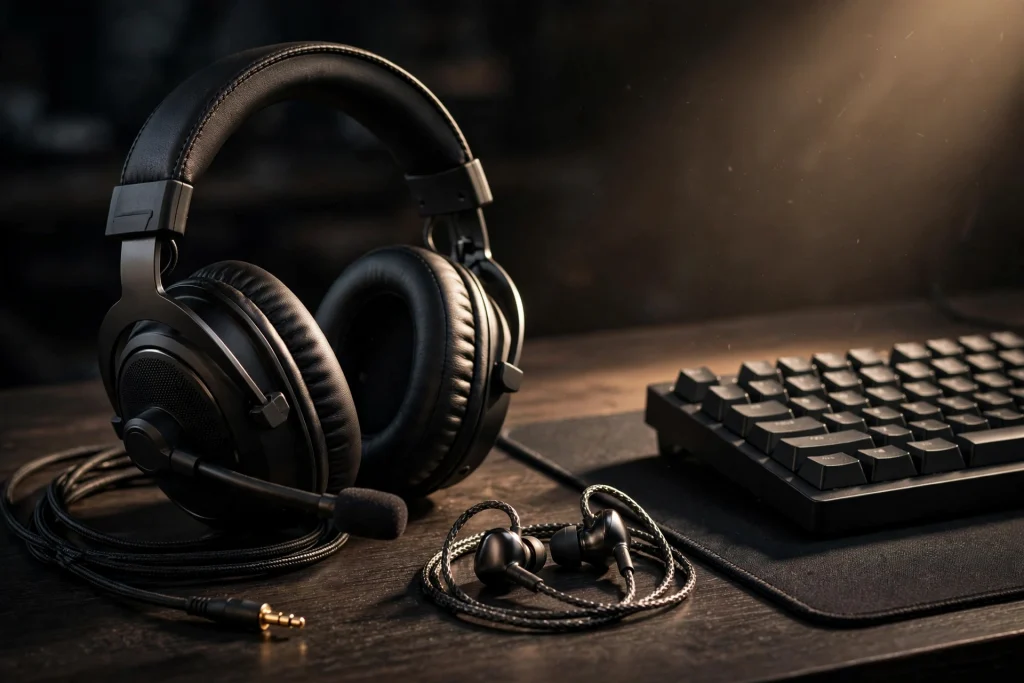
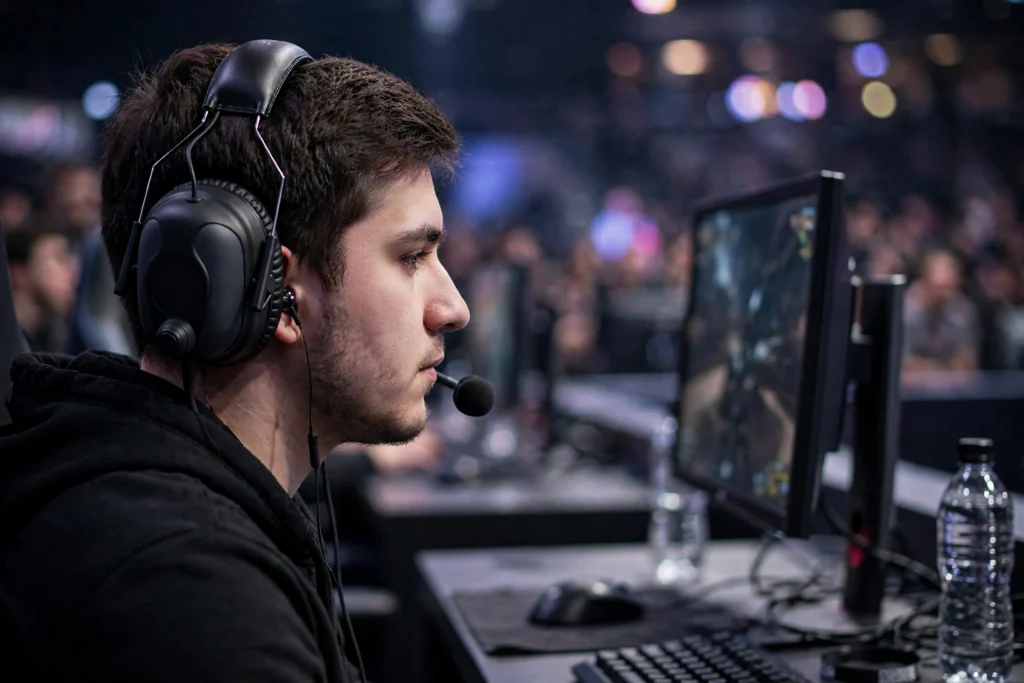
Watch any major esports final and you will see the same strange setup on every player: earbuds in their ears, with a full-size gaming headset worn over the top. It is not a fashion choice and it is not a backup pair. Pros wear IEMs (in-ear monitors) under headsets because the two devices form one noise-control system. The IEMs deliver the actual game audio through a sealed fit inside the ear. The headset on top drowns out the arena with white noise, adds a second layer of isolation, and carries the microphone. Each layer does a job the other cannot do as well.
The Two Layers Have Two Different Jobs
The easiest way to understand the setup is to stop thinking of it as two headphones. Think of it as one system with two parts, each handling a different problem.
The IEM solves the hearing the game problem. Because it sits inside the ear canal and seals, it delivers game sound clearly and consistently, match after match, no matter how the player moves their head. Footsteps, reload sounds, and ability cues arrive exactly as the player expects.
The headset solves the not hearing the arena problem. A tournament stage sits in front of thousands of shouting fans, loudspeakers, and casters. The headset plays white noise into the gap around the ear, masking that crowd noise, and its microphone handles team communication and referee communication. Neither job is optional at a big event.
What Each Layer Does
| Layer | Main job | Why it is used for that job |
|---|---|---|
| IEMs (in-ear monitors) | Play the actual game audio | Sealed in-ear fit gives strong isolation and a consistent sound every match |
| Headset (worn over the IEMs) | Play white noise / crowd masking and carry the microphone | Covers the ear with a second barrier and includes the boom mic for team comms |
Read the table again and one thing becomes obvious: the big, expensive-looking headset is not even the part playing the game. The small IEMs do the important audio work, while the headset works as a noise shield and communication tool.
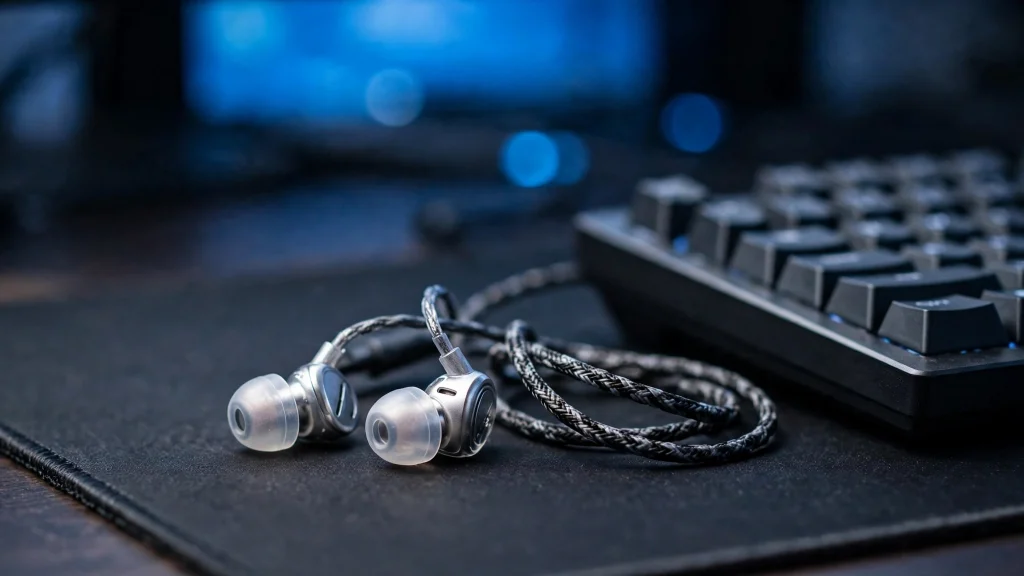
Why the IEM Does the Real Audio Work
A sealed in-ear fit has three advantages that matter in competition.
First, isolation. An IEM blocks outside sound passively, the same way an earplug does, before any game audio is even played. That means quieter game cues stay audible without cranking the volume.
Second, consistency. A headset’s sound changes depending on how it sits — a slightly different position, hair, or glasses can shift the seal and change what the player hears. An IEM inserted properly sounds the same every single time, which is exactly what a pro needs when their practice and their final must feel identical.
Third, fit under pressure. Players shake their heads, shout calls, and sweat through long series. IEMs stay put. That reliability is why the game audio is trusted to the smallest device in the setup. If you are shopping for the in-ear half of this setup, our guide to best gaming iems for fps games covers what to look for.
Why the Headset Stays On Top
If the IEMs already isolate and play the game, why add the headset at all?
White noise masking. Isolation alone cannot fully stop a roaring crowd during a clutch round. Tournaments feed white noise through the headset to wash out arena sound so players cannot hear the crowd react — which matters, because a sudden crowd gasp can leak information about what is happening on the other team’s screens.
The microphone. Team communication runs through the headset’s boom mic. It sits at a fixed distance from the mouth, picks up the player’s voice clearly, and is the standard channel officials use to talk to players.
A second physical barrier. Two layers block more sound than one. The headset’s cups over already-sealed IEMs make it far harder for caster commentary or crowd noise to reach the player.
Independent control. Splitting the system in two also means the two sounds can be balanced separately. The player hears game audio at the level they are used to from practice, while the white noise level is set by the tournament to fully cover the arena. One device doing both jobs would force a compromise between the two — the game too quiet under the masking noise, or the masking too weak under the game.
Why Not Just Use One Device?
A headset alone can be enough for a quiet online match, but its isolation depends on the seal of the ear cups, which varies from player to player and moment to moment. An IEM alone has no boom mic and no white-noise layer, so crowd noise still competes with game audio.
Wireless earbuds are not the answer either. Bluetooth audio typically lags by around 100ms or more, which is far too slow when a footstep cue needs to match what you see. Competitive wireless gear avoids Bluetooth for exactly this reason and uses 2.4GHz dongles instead — a topic we break down in 2.4ghz vs bluetooth gaming audio latency. Wired IEMs sidestep the whole problem: no battery, no pairing, and no meaningful delay.
How to Copy the Setup at Home
You probably do not need the full tournament stack in a quiet bedroom, but the same logic helps at a LAN or in a noisy house:
- Use wired IEMs as your main game-audio device for a consistent, sealed fit.
- If your room is loud, add a closed-back headset over the top mainly as a noise barrier, and use its mic for voice chat.
- If you play on a single device, choose the IEM first — it carries the audio that actually affects your performance.
For most home players, a good pair of IEMs alone gets you 90% of the benefit. The double layer earns its place where crowd noise is part of the problem.
FAQ
Do pro gamers hear the game through the IEMs or the headset?
Through the IEMs. The IEMs play all game audio. The headset plays white noise to mask the crowd and provides the microphone for communication.
Why do tournaments make players wear both?
Fairness and clarity. The white noise stops players from gaining information from crowd reactions, the sealed IEMs guarantee every player hears game cues clearly, and the headset mic gives officials a reliable communication channel.
Should I wear IEMs under a headset at home?
Only if your environment is noisy. In a quiet room, IEMs on their own give you the same game audio and isolation benefits. The second layer mainly solves arena-level noise.
Conclusion
Pro gamers wear IEMs under headsets because the combination is a noise-control system, not two headphones competing for the same job. The IEMs deliver sealed, consistent game audio; the headset masks the crowd with white noise and carries the mic. Once you see the split of duties, the “weird” tournament look makes complete sense — and the IEM half of the setup is the part worth copying first.